The Timeless Elegance of Chanel No. 5
rupalsehrawat@yahoo.co.in
December 10, 2024
Recent Post

Categories
Want To Try Our Services ?
Lorem ipsum dolor sit amet, consectetur adipiscing elit. Ut elit tellus luctus nec ullamcorper mattis pulvinar dapibus leo tellus luctus.
The Timeless Elegance of Chanel No. 5
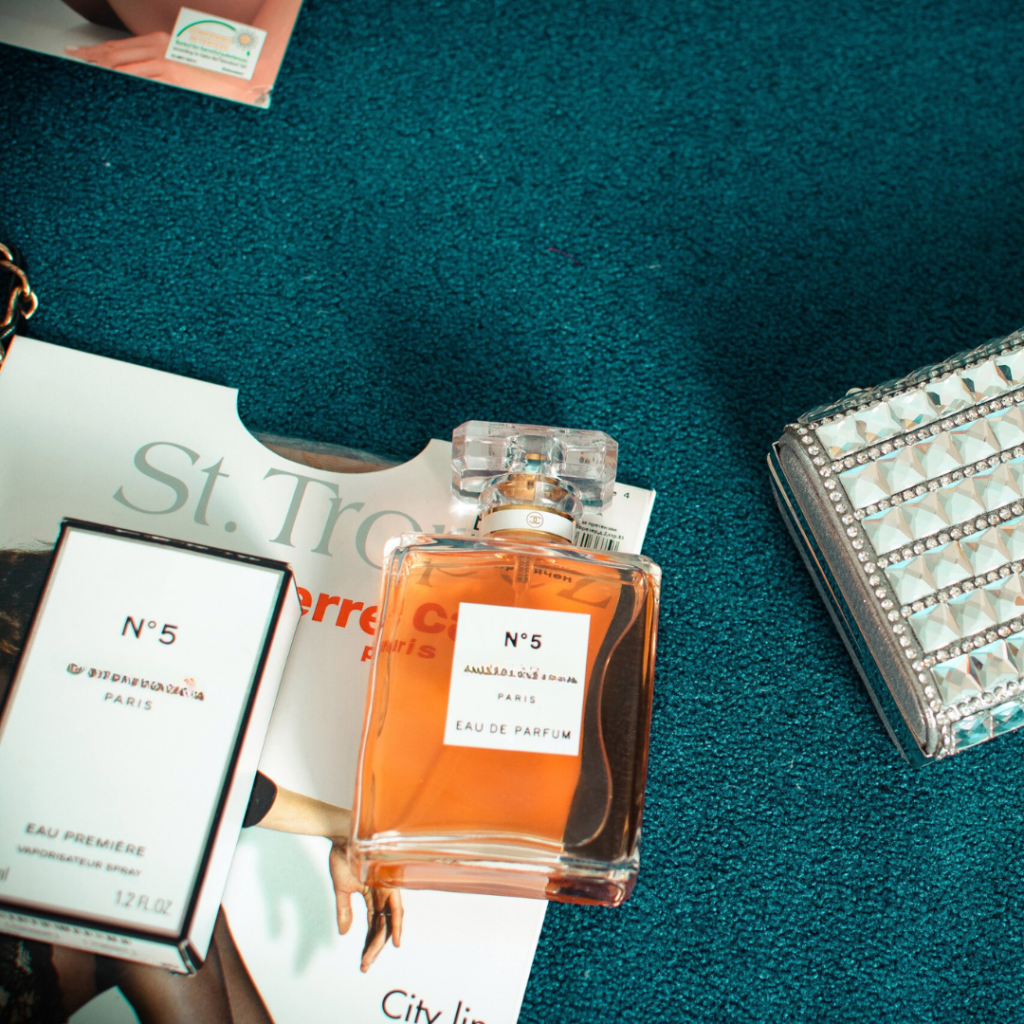
Perfume is more than just a fragrance; it is an art form that captures emotions, memories and identities. Among the myriads of scents that have graced the world, one name stands out: Chanel No. 5. It represents the epitome of luxury and modern femininity. This blog delves into the history, creation and impact of Chanel No. 5 exploring how they have shaped the perfume industry in the early 19Th century
The Birth of Chanel No. 5
Gabrielle Chanel: The Visionary
Chanel No. 5 was created by the iconic French designer Gabrielle “Coco” Chanel. Born in 1883 in Saumur, France, Coco Chanel rose from humble beginnings to become one of the most influential figures in fashion. Her vision of freeing women from the constraints of corsets and promoting a more casual elegance revolutionized the way women dressed. However, her influence extended beyond fashion into the world of fragrance.
The Creation of a Legend
The inception of Chanel No. 5 dates to 1921, when Coco Chanel sought to create a fragrance that would embody her vision of femininity. She approached perfumer Ernest Beaux, who presented her with a series of samples. The fifth sample, a complex blend of floral and aldehydic notes captivated Chanel. She believed it perfectly encapsulated her modern spirit and desired a scent that smelled like a woman not just flowers.
The Composition of Chanel No. 5
Chanel No. 5 is renowned for its intricate blend of ingredients. The fragrance is an aldehydic floral, featuring top notes of bergamot and lemon, heart notes of jasmine and rose and base notes of sandalwood and vanilla. The use of aldehydes was revolutionary; it added an ethereal quality to the perfume, making it unlike anything that had come before. This innovative approach set Chanel No. 5 apart from other fragrances, contributing to its timeless appeal. Founded upon a base of Olibanum, Labdanum and Guaiac wood, its main theme is predominantly floral with Gardenia somewhat accentuated these notes being effectively lifted by skilled use of Ylang-Ylang. Thus, the construction of the perfume was conventional. It was however the top note which set “No. 5” apart from anything that had gone before and which so effectively captured the imagination.
Perfumes containing chemicals of the class of fatty aldehydes, such as ‘Quelques Fleurs’ by Houbigant, were well known by the 1920s, but always the aldehydes were present in minute proportions simply for the purpose of accentuating certain floral notes they displayed. In ‘Chanel No.5’ fatty aldehydes with aldehyde C12 predominating were present in far greater proportions than ever before with the result that an entirely original type of note was generated. The odour effect of fatty aldehydes is then used to characterize a fragrance became known as “aldehydic” and perfumes of this type came to be so called Aldehydic perfumes, of which ‘No. 5’ was the first. These olfactive notes are powerful and persistent and exhibit marked radiance. Although they appear in the top note, the notes of most fatty aldehydes used in perfumery are themselves persistent and arid tend to remain perceptible throughout the evaporation of a perfume containing them.
The Cultural Impact of Chanel No. 5
An Iconic Brand
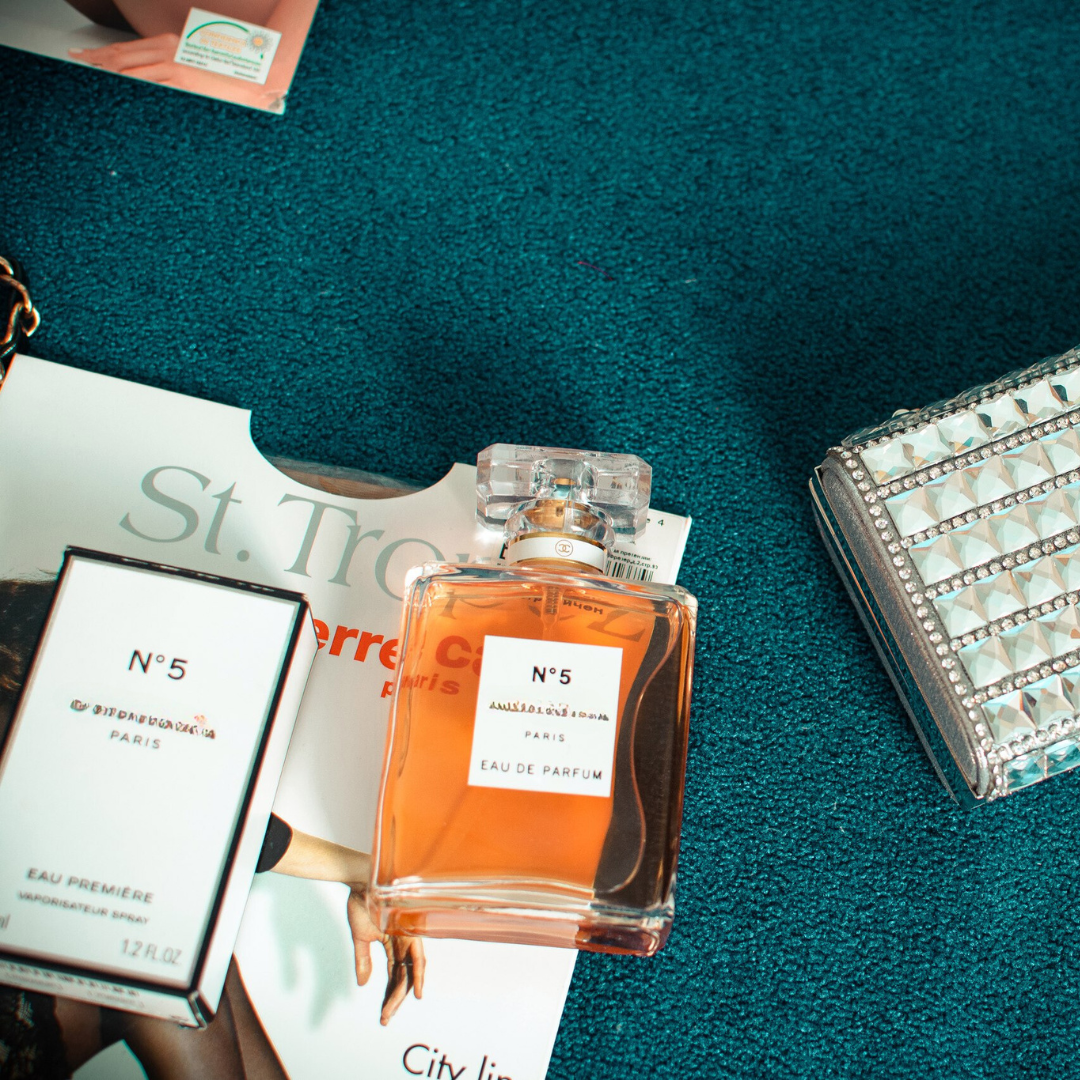
Chanel No. 5 quickly became synonymous with luxury and sophistication. Its iconic bottle designed by Coco Chanel herself is a work of art. The minimalist design featuring clean lines, and a simple label reflects Chanel’s belief in elegance and simplicity. Over the decades the bottle has become as recognizable as the fragrance itself. In almost stark contrast with its contemporary’s bottles and packaging for ‘No.5’ were of the simplest design: yet speaking of high quality and impeccable taste. Artistically a brilliant innovation rather than a great perfume, commercially a superlative success, ‘Chanel No.5 has become a legend in its own time; a perfume to be studied by the novice, matched by the improver and discussed even today by perfumers throughout the world.
Beginning of a new trend
The introduction of ‘No.5’, besides bringing to perfumery the aldehydic note, marked also the beginning of a new trend: the involvement of the French couturiers with perfumes. The reason for this departure from tradition was that for some years beforehand the large dressmaking firms in France had been experiencing difficulty in competing with the lavish presentations of the collections of the couturier Poiret and were seeking a means of survival which would readily be associated by the public with customary activities of the dressmaker.
What was to become the ideal association, that between fashion and perfumery, was fast realised by Coco Chanel and with the successful launch of ‘No. 5’ other well-known couturiers soon followed her example: D’Orsay with ‘Le Dandy’ in l925, Lanvin with the famous ‘Arpége’ in 1927, and ‘Scandal’ in 1931, worth with ‘Je Reviens’ in 1932;these are but examples of the countless couturier perfumes which have been launched Since 1921 to the present day.
There is another reason why success in the marketing of their ‘own’ perfumes came so readily to the dressmakers. Until the 1920s, the most profitable enterprises in the perfume industry were the large perfumeries such as Coty, Houbigant and Piver, all of whom employed their own perfumers. The manufacturers of the raw materials used by the perfumeries, however, made relatively small profits in relation to the large expenditure they incurred by installing and maintaining plant to produce established and new aromatic chemicals. In seeking to redress the balance some of these latter firms began to offer ready-made perfumes to the dressmakers, whose only problem then, as firms outside the perfume industry itself, is as the design of suitable presentations. No real problem existed, however, since design and presentation were the foundation stones of the couturiers’ success in their own field.
So it was that with a few notable exceptions the practice of creative perfumery in France drifted away from the perfumeries and towards the manufacturers of perfumery synthetics and the dressmakers. Thus we. or rather those of us for whom the salon represents unexplored territory, tend to associate names such as Balenciaga, Grés and Jean Patou as much or even more with high-quality perfumes as with the world of haute couture.
Celebrity Endorsements
One of the pivotal moments in Chanel No. 5’s history was its association with Hollywood glamour. In 1952, Marilyn Monroe famously claimed that she wore nothing to bed but a few drops of Chanel No. 5. This statement not only solidified the perfume’s status as a symbol of allure but also positioned it firmly within popular culture.
A Constant Evolution
Chanel No. 5 has seen numerous reinterpretations over the years, adapting to contemporary tastes while retaining its classic roots. In 1986, Jacques Polge became the in-house perfumer for Chanel and worked to preserve the integrity of the original scent while introducing new variations, such as Chanel No. 5 Eau Première in 2008.
Conclusion
The brand Chanel No.5 excels in the art of storytelling. It is steeped in the narrative of Coco Chanel’s life, her defiance of societal norms, and her quest for elegance. Chanel No. 5 stand as one of the titans of the perfume world, with a unique story and legacy. Chanel No. 5 has redefined femininity and luxury, It highlights the beauty of perfume as an art form—one that transcends time and continues to inspire generations.